hot melt hoses

How Heated Hoses Work

Heated hoses are designed to transfer hot-melt adhesive from the melter to the applicator head at a stable, controlled temperature. Their purpose is straightforward: to keep adhesive hot, fluid and ready for consistent application. However, achieving this reliably requires a carefully engineered combination of tubing, heating, insulation, sensors and fittings.

At Heated Hoses R Us, we supply temperature-controlled hoses for industrial adhesive systems across the UK and Ireland. Reliable hose temperature control helps reduce poor flow, nozzle blockages, stringing, charring and inconsistent bonding in processes such as profile wrapping, lamination, woodworking and furniture manufacture.
SHOP HEATED HOSES  CONTACT US


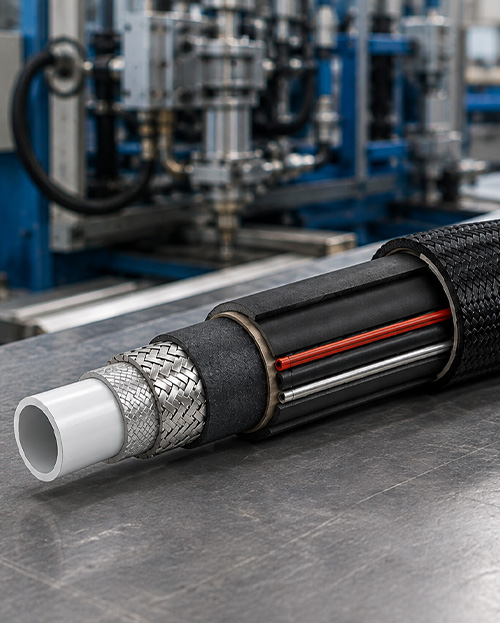
Cutaway view of a heated hose assembly with insulation and heating elements on a workshop table.

The Core Structure of a Heated Hose

A heated hose is made up of several layers, each with an important role in adhesive transfer and temperature stability.

PTFE Inner Tube

The adhesive passes through an internal PTFE tube. PTFE heated hoses are widely used for hot-melt adhesive systems because PTFE resists high temperatures, chemical attack and adhesive build-up.

Inner bore sizes commonly range from around 6mm to 25mm. Smaller bores can suit controlled, precise application, while larger internal diameters support higher adhesive output.

Heating Element and Insulation

A resistance heating wire is wrapped around the inner tube to generate heat along the hose length. The hose is then protected by heated hose insulation, which retains heat, supports stable adhesive viscosity and helps keep the external surface at a safer temperature.

Outer Jacket

The outer jacket protects the hose against abrasion, movement, dust, spills and general workshop wear. Options can include protective braiding, reduced-diameter jackets and chemical-resistant coverings.


How Heat Is Controlled

So, how does a heated hose work in practice? The melter heats the adhesive, while the hose maintains its temperature during transfer to the applicator head.

Heated hose temperature sensors monitor the temperature within the assembly and send feedback to a heated hose controller. The controller compares the measured temperature with the required setpoint, then adjusts power to the heating element to maintain the correct working range.

This process works similarly to an oven thermostat, but with the level of control required for industrial adhesive application. Stable temperatures help maintain adhesive viscosity and prevent sudden changes in flow or application quality.

Connection points are equally important. The fittings between the melter, hose and applicator should be heated and insulated to reduce thermal bridges. A cold connector can allow adhesive to cool at the hose end, increasing the risk of restricted flow, blockages and poor bonding.

What Heated Hoses Actually Do in Production

Heated adhesive hoses maintain the correct viscosity of hot-melt adhesive from source to application point. If adhesive cools too much, it thickens and may cause uneven patterns, stringing, increased pressure or nozzle blockages. If it becomes too hot, it can degrade, discolour or form char.

Stable temperature-controlled hoses help deliver:

  • Consistent adhesive flow
  • Cleaner application patterns
  • Reliable bond quality
  • Reduced adhesive degradation during pauses
  • Better repeatability at production speed

This is particularly important for profile wrapping, lamination, woodworking, kitchen and bedroom manufacturing, and industrial assembly processes.

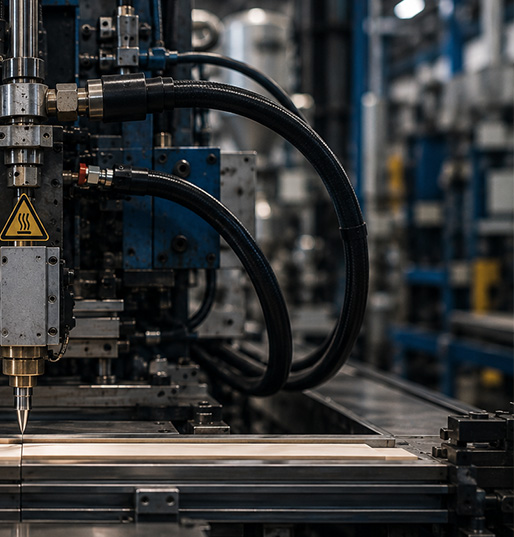
Heated hoses transferring hot-melt adhesive in an industrial setting.

Compatibility and Customisation

Heated Hoses R Us can supply custom-built and replacement hose assemblies with a choice of bore sizes, lengths and fittings. Hoses can be produced from approximately 0.4m to 12m and beyond, with brass, iron or stainless-steel fittings.

We provide compatible solutions for Nordson, Robatech, Melton and other OEM adhesive systems, including BSP, metric, JIC and ASA connections.

Why Modern Heated Hoses Are More Efficient

Modern heated hose components can include improved insulation, fully insulated plug couplings and more efficient heating layouts. These features help reduce heat loss, improve heat-up performance and maintain lower external jacket temperatures.

A well-specified hose assembly can also help maintain adhesive condition during short production stops, reducing unnecessary waste and supporting safer operation.


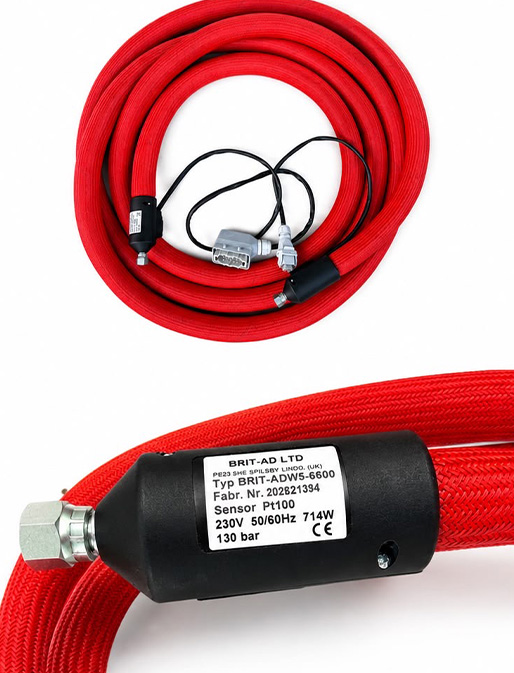
Red heated hose assembly with sensor attachment and technical label.

 Choosing the Right Heated Hose

The right hose is not simply the one with the highest temperature rating. It must match your adhesive, machine layout, flow requirement, operating temperature, pressure and end connections. We use the STAMPED approach: Size, Temperature, Application, Media, Pressure, Ends and Delivery.

Size

Internal diameter, hose length and routing affect flow and pressure. Typically, 6–10mm internal diameter hoses suit profile wrapping and woodworking, while 10–16mm bores are often used for lamination and higher-output systems. Allow enough hose length for machine movement and bend radius, without creating unnecessary loops.

Temperature and media

EVA and polyolefin adhesives commonly operate between approximately 140°C and 200°C. PUR and reactive adhesives may need tighter control and specialised construction. PTFE heated hoses for hot melt adhesive systems are generally an effective choice, but the complete assembly must be compatible with the adhesive.

Application, pressure and ends

Consider movement, abrasion, installation space, working pressure and potential startup surges. Select fittings that match the melter and applicator, with properly heated couplings to reduce heat loss.


 How to Maintain a Heated Hose

Correct maintenance extends hose life, supports adhesive performance and helps prevent unplanned downtime.


Daily Checks

  • Check for cuts, abrasion, crushing, leaks or loose fittings.
  • Confirm the hose reaches and holds its temperature setpoint.
  • Ensure it is correctly routed, supported and not rubbing, kinked or under tension.


Regular Inspections

  • Clean the outer jacket and inspect insulation, electrical leads, plugs and connectors.
  • Check sensor readings against the controller setpoint.
  • Inspect fittings, threads and heating element continuity for wear or damage.
  • Confirm the hose maintains a safe bend radius and is not dragging on the floor.


Common Faults

Look out for inconsistent temperature, stringing, charring, poor adhesive flow, blockages or jacket damage. Causes may include sensor or heating faults, damaged insulation, poor routing, kinks or incorrect settings.

When to Replace a Heated Hose

Replace the hose if you find crushed sections, exposed wiring, a burnt insulation smell, repeated blockages, ongoing temperature instability or adhesive inside the outer jacket.


Need Advice on a Heated Hose Assembly?


Heated Hoses R Us supplies heated hoses, replacement assemblies, temperature controllers, sensors, connectors, fittings and maintenance support throughout the UK and Ireland. For advice contact us today.


Reece ​ 07791640382

Tony    07484341294

Nick  07874086210​

 enquiries@heatedhosesrusuk.com 


0
Shopping Basket
X